
Table of Contents
- Breathing Exercises for Immediate Stress Relief
- Herbal Remedies for Stress and Anxiety
- Lifestyle Changes to Reduce Daily Stress
- Somatic Stress Release and Grounding Techniques
- Workplace Micro-Breaks and Digital Detox
- Building a Daily Routine with Natural Solutions
- Frequently Asked Questions
Last Updated: September 28, 2026
Breathing Exercises for Immediate Stress Relief
The fastest natural solutions for daily stress relief often start with a single breath. Breathing exercises directly influence the nervous system, slowing heart rate and lowering cortisol within minutes. This guide breaks down seven proven techniques you can use today.
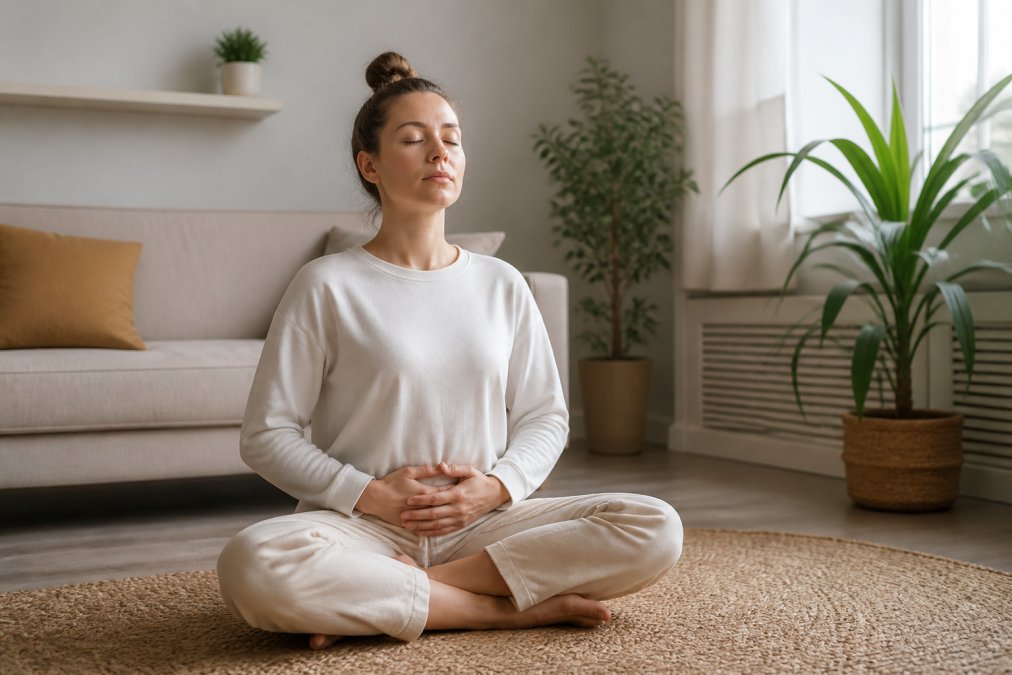
Box Breathing: A 4-4-4-4 Technique
Box breathing follows a fixed rhythm: inhale for four counts, hold for four, exhale for four, hold for four. Repeat the cycle five to ten times.
How to Use Breathwork During a Stressful Moment
You can use breathwork anywhere: before a meeting, in traffic, or mid-argument. Try this sequence:
- Stop what you are doing and drop your shoulders.
- Breathe in through your nose for a count of four.
- Hold briefly, then exhale slowly through your mouth for six counts.
- Repeat five times before returning to the task.
Herbal Remedies for Stress and Anxiety
Herbal remedies offer gentle, daily support for a stressed nervous system. The most studied options fall into two groups: adaptogens that help the body cope with pressure, and calming herbs that promote relaxation.
Adaptogens: Ashwagandha and Rhodiola
Ashwagandha is an adaptogenic herb used to help the body manage daily stress levels. It is widely available in capsule or powder form, with organic root options from high street health stores such as Holland & Barrett's supplement range starting around £10. Effects often take several weeks to become noticeable, so consistency matters more than dosage.
Calming Herbs: Chamomile, Passionflower, and Lemon Balm
Chamomile tea is the classic evening ritual: caffeine-free and containing apigenin, an antioxidant that binds to receptors in the brain. Expect a mild effect, not a sedative one.
| Remedy | Best For | Typical Format | Time to Notice |
|---|---|---|---|
| Ashwagandha | Ongoing daily stress | Capsule or powder | Several weeks |
| Rhodiola | Burnout, mental fatigue | Capsule | Days to weeks |
| Chamomile | Evening wind-down | Tea | Immediate, mild |
| Passionflower | Acute anxious moments | Liquid tincture | Within the hour |
| Lemon balm | Daytime calm | Tea or capsule | Immediate, mild |
Lifestyle Changes to Reduce Daily Stress
Breathing and herbs take the edge off a stressful moment. Lifestyle changes lower your baseline by addressing the inputs that keep the nervous system switched on: light, caffeine, sleep timing, blood sugar and work boundaries.
Sleep Hygiene: Build the Conditions, Not Just the Hours
Sleep is the single largest lever on how reactive you feel the next day. Sleep hygiene is not about forcing eight hours; it is about removing the friction that stops sleep arriving.
A practical evening protocol:
- Fix your wake time first. A consistent wake time anchors your circadian rhythm more effectively than a consistent bedtime, because morning light sets the clock for the whole day.
- Get daylight within 30 minutes of waking. Ten to fifteen minutes outdoors, or sitting near an open window, is enough to reinforce that anchor.
- Keep the bedroom cool and dark. A room that is too warm fragments sleep and makes you more likely to wake in the early hours.
- Stop screens 60 minutes before bed. The issue is not only blue light; it is the arousal from messages, news and short-form video, which is harder to unwind from than the light itself.
- If you cannot sleep, get up. Staying in bed while frustrated teaches your brain that bed is a place for worry. Move to another room, keep the lights low, and return when you feel sleepy.
Caffeine: Timing Matters More Than Quantity
Caffeine has a half-life of roughly five to six hours, so a 3pm coffee still leaves about a quarter of its caffeine in your system around midnight, enough to delay sleep onset and reduce deep sleep even when you fall asleep easily.
Two changes do most of the work:
- Set a caffeine curfew. Noon is a reasonable default for most people; shift it earlier if you are sensitive or prone to anxiety.
- Delay your first cup. Waiting 60 to 90 minutes after waking, rather than drinking immediately, avoids stacking caffeine on top of your natural morning cortisol rise and tends to produce a steadier effect through the morning.
Nutrition: Steady Blood Sugar, Steadier Mood
Blood sugar swings mimic anxiety: a sharp drop after a high-sugar lunch can produce palpitations, irritability and unease that feels psychological but is metabolic.
Simple adjustments:
- Anchor meals with protein and fibre. Eggs, Greek yoghurt, beans, lentils, nuts and seeds slow the release of glucose and flatten the afternoon dip.
- Do not skip lunch on a stressful day. Skipping meals is one of the most common triggers for an afternoon crash that gets misread as a panic episode.
- Keep magnesium-rich foods in rotation. Leafy greens, nuts, seeds and wholegrains support muscle relaxation and normal nervous system function. Magnesium glycinate is a commonly used supplement form because it is well absorbed and generally gentle on the stomach, but food first is the sensible order.
- Be cautious with alcohol as a wind-down. A drink may help you fall asleep, but it reliably fragments sleep in the second half of the night and raises next-day anxiety.
Boundary Setting: Protect the Energy You Need to Cope
Boundaries are not a personality trait; they are decisions you make in advance, so you are not negotiating with yourself while already depleted.
Try these concrete moves:
- Set a hard stop for work email. Decide the time, then remove the app from your phone's home screen so checking requires a deliberate action.
- Use a two-line refusal. "I can't take that on this week, but I could help in a fortnight." It closes the request without inviting debate.
- Decline one commitment this week. Not forever, just one, to prove to yourself that the sky does not fall.
- Block 15 minutes of quiet time in your calendar and treat it as a meeting with a person who outranks everyone else.
- Batch notifications. Two or three fixed checkpoints a day instead of reacting to each ping.
Time Management Is Really Emotional Regulation
Productivity tools organise tasks but do not help you tolerate the discomfort of an unanswered message or an unfinished list. The real skill is noticing the urge to react and choosing to wait.
Somatic Stress Release and Grounding Techniques
Somatic stress release targets tension stored in the body, not just the mind, often the missing piece for people who feel tense but cannot explain why.
Try these simple practices:
- Shaking: Stand and shake out your arms and legs for 60 seconds.
- Progressive muscle relaxation: Tense each muscle group for five seconds, then release.
- Grounding techniques: Name five things you can see, four you can touch, three you can hear.
- Butterfly hug: Cross your arms over your chest and tap alternating shoulders slowly.
Workplace Micro-Breaks and Digital Detox
Most stress guides say "take a break" and "reduce screen time" without explaining how, when or for how long. This section gives you a repeatable framework for both, one you can run inside a working day without asking permission.
The Micro-Break Protocol: 90 Seconds, Every Hour
A micro-break is a deliberate 60-to-90-second pause between tasks, not a break you have to earn. The point is to interrupt accumulating tension before it becomes a headache, a clenched jaw or a short temper.
- Drop your shoulders and unclench your jaw. Most people hold tension here without noticing.
- Look at something at least six metres away for 20 seconds. This relaxes the eye muscles that tighten during screen work and reduces the low-grade strain that feeds irritability.
- Roll your shoulders back three times, slowly.
- Take six slow breaths, with the exhale longer than the inhale.
- Stand up and shift your weight side to side for 20 seconds.
A Step-by-Step Daily Digital Detox
A digital detox does not mean going offline. It means creating predictable gaps between you and notifications, so your attention is not permanently on loan to whoever messages next.
A workable daily structure:
- First 30 minutes after waking: no phone. Use a separate alarm clock if you need one. This prevents the day starting in a reactive state.
- First hour of work: no email or messaging apps. Spend it on the one task that requires actual thought. This is the single highest-return change in this section.
- Notifications off by default. Turn them on only for calls and messages from people who genuinely need to reach you urgently.
- Phone in another room during meals. Physical distance reduces the urge to check far more effectively than willpower.
- A screen-free hour before bed. Replace it with reading, stretching, or the evening wind-down from your routine.
- One screen-free half-day per week. Saturday morning or Sunday afternoon works well for most people.
Pairing the Two: The Screen-Break Rule
The two practices reinforce each other. On every micro-break, leave your phone on the desk or in a drawer, the physical distance reduces the reflex to check it, making the break genuinely restorative rather than just a change of screen.
Building a Daily Routine with Natural Solutions
A daily routine turns scattered tips into a system. Anchor each practice to something you already do, so it becomes automatic rather than another task to remember.
Here is a simple structure:
- Morning: Ten minutes of light movement, daylight exposure, and coffee before noon only.
- Midday: One workplace micro-break per hour and a glass of water.
- Afternoon: Rhodiola if you use it, plus a short walk.
- Evening: Chamomile tea, journaling, and a screen-free hour before bed.
- Night: Box breathing in bed if your mind is still racing.
Frequently Asked Questions
What can I take naturally to relieve stress?
Several natural options can help. Herbal remedies for stress and anxiety include ashwagandha, rhodiola, chamomile, passionflower, and lemon balm. Magnesium-rich foods and omega-3 fatty acids also support nervous system function. Always check with a GP or pharmacist before starting supplements, especially if you take medication or have a health condition.
How do breathing exercises help with immediate stress relief?
Deep breathing techniques activate the parasympathetic nervous system, which slows heart rate and lowers blood pressure. A simple box breathing pattern (inhale for four counts, hold for four, exhale for four, hold for four) can calm your body within a minute or two. Practise daily so the technique feels automatic during stressful moments.
What lifestyle changes reduce daily stress most effectively?
Prioritise sleep hygiene by keeping a consistent bedtime and reducing caffeine after midday. Set clear boundaries around work messages and screen time. Regular physical activity, even a short daily walk, helps regulate cortisol. Journaling and grounding techniques also give your mind a structured way to process pressure before it builds up.
Are natural solutions for daily stress relief enough on their own?
For everyday stress, natural approaches like breathwork, herbal remedies, and lifestyle adjustments often make a real difference. If stress is persistent, affects your sleep or appetite, or feels unmanageable, speak to your GP. Natural methods work well alongside professional support, not as a replacement for it.
Daily stress rarely disappears on its own, and trying to manage it with willpower alone often leaves you more exhausted. Nader care exists to make the natural path easier, with ebooks built around natural methods, personalised seven-email support, and practical guidance for deeper sleep and a quieter mind. If you want to live more happy and less pain naturally, get started with Nader care and begin sleeping better tonight.