
Table of Contents
- What 'Natural Cares Hub' Actually Means in 2026
- Quick Comparison: Natural Cares Hub vs Alternatives
- Nader care: Digital Ebooks With Personalised Email Support
- Google Nest Hub (2nd Gen): Sleep Sensing Meets Smart Home Control
- How to Improve Sleep Quality Naturally: What Each Hub Delivers
- Wellness Coaching vs Self-Guided Ebooks: Which Approach Fits You?
- Where Each Hub Wins: Scenarios and Trade-Offs
- Frequently Asked Questions
Last Updated: September 11, 2026
What 'Natural Cares Hub' Actually Means in 2026
In 2026, a wellness hub describes something specific: a central place, usually digital, where someone gathers natural wellness tools, sleep guidance, and self-help resources into one routine. It is not a single product category, but covers ebook libraries, smart displays with sleep sensing, symptom-tracking apps, and clinical monitoring platforms, all marketed as ways to feel better without medication.
That vagueness is the problem. When people search for a natural cares hub vs alternatives, they are usually trying to work out whether they need a device, an app, or a guided programme. This guide from Nader care breaks down what each option delivers, where it falls short, and which one suits you.
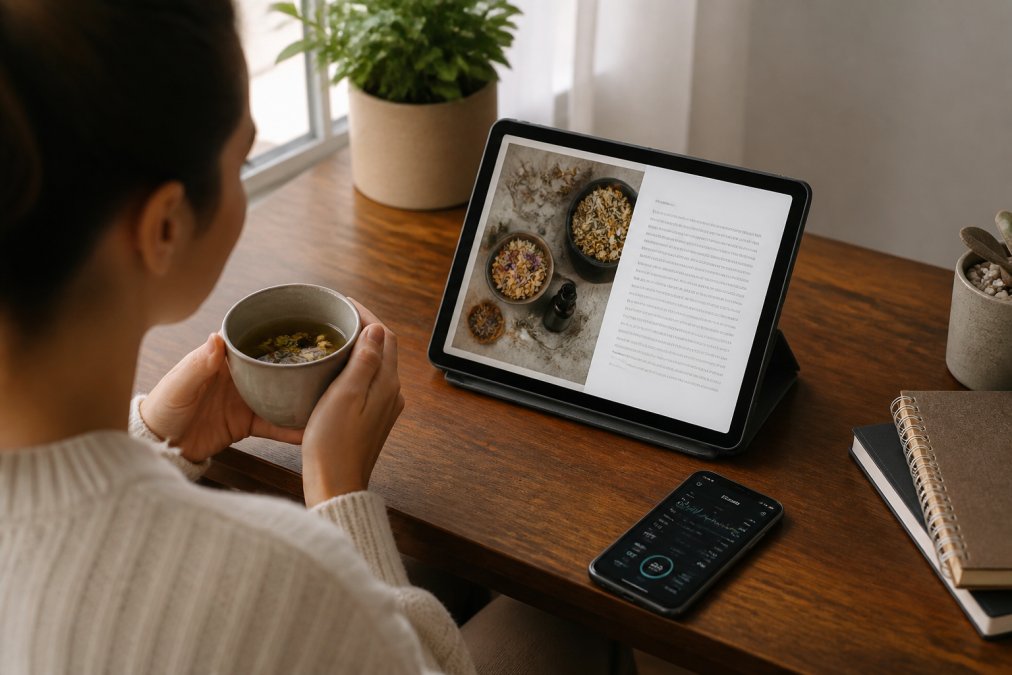
The core distinction is between hubs that track you and hubs that teach you. Tracking hubs collect data passively and hand you a dashboard. Teaching hubs give you knowledge you apply yourself. Most people buy the first and need the second.
Quick Comparison: Natural Cares Hub vs Alternatives
The fastest way to choose is to match the hub to your actual problem. For poor sleep and a restless mind, a knowledge-based hub will do more than a device that simply reports you slept badly.
| Hub | Format | Best For | Ongoing Cost | Key Limitation |
|---|---|---|---|---|
| Nader care | Digital ebooks + email support | Sleep, pain, low mood | One-time purchase | Requires self-motivation |
| Google Nest Hub (2nd Gen) | Smart display | Sleep tracking + home control | One-time purchase | Needs bedside proximity |
| Triggerbites | Tracking app | Digestive triggers | Subscription | Digestive health only |
| mySymptoms | Tracking app | Manual symptom logging | One-time purchase | Constant manual input |
| CCN Health | Clinical monitoring | Care providers | Per-patient subscription | Not for individuals |
The pattern is clear: tracking tools tell you what happened, while teaching tools help you change it. That difference matters more than any feature list.
Nader care: Digital Ebooks With Personalised Email Support
Nader care is a digital wellness publisher that delivers self-help ebooks paired with personalised email support, aimed at people dealing with poor sleep, persistent pain, and a busy mind. Rather than selling a device, it hands you the knowledge and personalized email support to apply it.
The approach suits anyone who has tried tracking apps and found the data interesting but useless: knowing you woke four times tells you nothing about why. Nader care focuses on natural methods and personal empowerment through knowledge, so the material is designed to be read, applied, and revisited.
Pros:
- Focus on natural methods rather than gadgets
- Personalised seven-email support, not automated replies
- One-time purchase with no subscription
Cons:
- Requires you to read and act, not just wear something
- No passive tracking or dashboards
What most guides miss is that the hardest part of natural wellness is not information but consistency. Personalized email support can help address that gap more directly than another app notification.
Google Nest Hub (2nd Gen): Sleep Sensing Meets Smart Home Control
The Google Nest Hub (2nd Gen) is a smart display combining contactless sleep sensing, voice-controlled routines, and a visual control panel for connected home devices. It typically sells around £89.99 as a one-time purchase and is designed for a bedside table.
Its sleep sensing uses low-power radar rather than a worn sensor, useful if you dislike wearing a watch overnight. The trade-off is placement: it needs to sit close to your bed with a clear line of sight for accurate readings. It reports movement, breathing rate, and snoring, but does not explain the habit, worry, or racing thoughts behind a bad night.
Pros:
- Non-contact sleep tracking via radar
- Doubles as an alarm clock with a sunrise wake feature
- Acts as a control panel for lights, heating, and other connected devices
Cons:
- Requires bedside proximity and a clear line of sight for accurate sensing
- Reports sleep quality without helping you change it
- Depends on continued manufacturer firmware and cloud support
Connectivity standards: what actually talks to what
This is where most reviews stay vague, and it is the biggest factor in whether a hub stays useful. The Nest Hub speaks to devices over Wi-Fi and Thread, and can act as a Thread border router. It also supports Matter, the cross-vendor standard backed by the Connectivity Standards Alliance, which lets compliant devices from different brands work together without a proprietary bridge (csa-iot.org). It does not include a Zigbee or Z-Wave radio, so older sensors and bulbs on those protocols need a separate bridge or hub.
That distinction matters at purchase. If you already own Zigbee sensors, a display without a Zigbee radio is not a drop-in replacement for a dedicated smart-home hub, it is an additional layer. Starting fresh, Matter-certified devices avoid lock-in entirely, because they are designed to work across Apple Home, Google Home, Amazon Alexa, and Samsung SmartThings ecosystems.
Local control and the cloud dependency
A common assumption is that a smart display works offline. In practice, most voice commands and routines route through the manufacturer's cloud, so if your broadband drops, the display loses most of its smart-home function. Some Matter devices support local control over Thread or Wi-Fi, but the display still leans on cloud services for voice and automation logic. For a hub that keeps working when the internet does not, a local-only setup fits better, see the DIY angle below.
Long-term software support
Smart displays are not buy-once-keep-forever devices. They depend on the manufacturer continuing to ship firmware updates and keep cloud services running. When a product line reaches end of support, features can be withdrawn and the device can lose access to services it was sold with. Before buying, check the published support policy and how long the current model has been on the market: a display in its fifth year is closer to the end of its update window than one launched last quarter.
Energy use
A bedside display draws power continuously, typically a few watts, small per unit but adding up across a home full of always-on devices (energy.gov). A knowledge-based hub such as an ebook or PDF draws nothing when idle. Neither figure is decisive alone, but over five years the always-on device carries a running cost the download does not.
That last point is the crux. A smart display is excellent at telling you that you slept badly and at switching off the lamp, but it has no mechanism for fixing the habit, worry, or racing thoughts causing it, and it carries a support lifespan you do not control.
How to Improve Sleep Quality Naturally: What Each Hub Delivers
Learning how to improve sleep quality naturally comes down to routine, environment, and mental wind-down, not the number of sensors in your bedroom. The most effective changes are behavioural and cost nothing.
Here is what each type of hub actually contributes:
- Knowledge hubs: explain why you wake at 3am, how caffeine timing affects deep sleep, and how to build a wind-down routine that sticks
- Smart displays: track duration and movement, offer sunrise alarms, and control lighting and temperature
- Tracking apps: log food, symptoms, and sleep patterns to surface correlations you would otherwise miss
A common mistake is buying a tracking device first. If you do not yet have a consistent bedtime routine, the data will simply confirm what you already know. Fix the routine first, then measure.
Wellness Coaching vs Self-Guided Ebooks: Which Approach Fits You?
Choosing between wellness coaching and self-guided ebooks depends on how much structure you need to follow through. Coaching offers live accountability and tailored feedback, usually at a recurring cost. Self-guided ebooks offer the same knowledge at a fraction of the price, but you supply the discipline.
Neither is universally better. Coaching suits people who stall without a scheduled conversation; ebooks suit those who prefer to work privately, at their own pace, and revisit material when a problem returns.
A hybrid works well: use a wellness hub ebook as your reference library, then add personalised email support if you need a nudge. That is the model Nader care uses.
NHS guidance on sleep and tiredness sets out the fundamentals of sleep hygiene, and it is worth reading before you spend money on any hub.
Where Each Hub Wins: Scenarios and Trade-Offs
Match the hub to the scenario and the decision becomes obvious. There is no single winner, only a winner for your specific problem. The scenarios below go beyond feature lists to cover two angles most guides skip: building your own local-only hub, and how long each option is likely to keep working.
- If you wake repeatedly and do not know why: a knowledge hub wins. You need to understand the cause, not log the symptom.
- If you suspect food is triggering symptoms: a dedicated tracking app wins. Its correlation tools do work that reading cannot.
- If you want hands-free control of lights and temperature at bedtime: a smart display wins, provided you accept the cloud dependency.
- If you are managing a patient caseload: a clinical monitoring platform is built for that, and nothing else here is.
- If you want to feel better without buying another gadget: a knowledge-based hub is the most direct route.
- If you want a hub that keeps working when the internet does not: build your own local-only hub.
The gap most guides miss: DIY and local-only hubs
Every mainstream comparison assumes you will buy a retail product, leaving out a growing group who want a hub running entirely on their own network, with no cloud account and no vendor able to switch it off remotely. The practical route is a small single-board computer, a Raspberry Pi is the common choice, running open-source home automation software such as Home Assistant. Add a USB Zigbee or Z-Wave stick and it becomes a genuine hub that speaks the same protocols as commercial devices, but stores all data locally.
The trade-offs are real. You supply the setup time, updates, and troubleshooting; there is no support line and no app store. But you also get no subscription, no telemetry leaving the house, and no risk of a manufacturer ending support for hardware you already own. For anyone whose main concern is privacy rather than convenience, this is the option retail comparisons never mention.
Long-term software support: the factor that decides five-year value
Consumers increasingly worry about planned obsolescence, and hubs are especially exposed to it. A smart display or subscription app depends on the vendor continuing to run servers and ship firmware. When that stops, the device can lose the features it was sold with. A one-time-purchase ebook or a locally hosted open-source hub carries no such dependency, the former because there is nothing to update, the latter because you control the update cycle.
A practical way to judge this before buying: check how long the current model has been on sale, whether the vendor publishes an end-of-support policy, and whether the device can function without an internet connection. A hub that fails all three is a short-term purchase dressed as a long-term one.
Energy consumption: the running cost nobody quotes
Few comparisons mention that always-on hubs draw power continuously. A bedside smart display typically draws a few watts, modest per unit but permanent. A locally hosted hub on a low-power single-board computer draws a similar order of magnitude, while a knowledge-based hub such as an ebook draws nothing when idle. If you are trying to reduce household energy use, the hub itself is a minor factor, but the devices it controls (lighting, heating, standby loads) are where the real savings sit, and a hub with energy monitoring can surface those. That is a genuine argument for a smart hub that wellness-focused comparisons never make.
Frequently Asked Questions
What should I look for in a natural wellness resource hub?
Look for evidence-based content, clear sourcing, privacy policies that protect your data, and support options like email or coaching. A good wellness hub should explain how to improve sleep quality naturally without vague promises. Check whether the hub offers personalised guidance or just generic articles. Also consider format: digital ebooks suit self-paced learning, while coaching provides accountability. Finally, verify that the hub is transparent about pricing and any subscription terms.
Are digital wellness ebooks an effective way to improve sleep quality?
Digital wellness ebooks can be effective when they provide structured, actionable techniques such as sleep hygiene routines, relaxation exercises, and cognitive strategies. Unlike generic blogs, a well-designed ebook guides you step by step. The key is applying the advice consistently. Many people benefit from pairing ebooks with personalised email support, which offers encouragement and answers to specific questions. Results vary, but a focused programme can help you work towards better sleep.
How do evidence-based wellness platforms differ from general health blogs?
Evidence-based platforms cite research, explain the reasoning behind recommendations, and avoid miracle cures. General health blogs often rely on anecdotes or unverified claims. A credible wellness hub will reference studies or established practices, such as cognitive behavioural therapy for insomnia, and encourage you to consult a GP for medical concerns. They also tend to offer structured programmes rather than scattered tips, making it easier to track progress and stay motivated.
What are the benefits of personalised email support in wellness programmes?
Personalised email support provides accountability, tailored advice, and a way to ask questions about your specific situation. Unlike automated responses, a real person can adjust recommendations based on your progress. This support can help you stay on track with natural sleep improvement or pain management techniques. It also bridges the gap between self-guided ebooks and full coaching, offering human contact without the cost of one-to-one sessions.
How can I verify the credibility of a natural health information provider?
Check whether the provider lists author credentials, cites reliable sources, and avoids exaggerated claims. Look for a clear privacy policy and terms of service. Reputable providers will not promise quick fixes for chronic conditions. You can also search for independent reviews or ask the provider directly about their approach. If a provider offers personalised support, ask how it works and who delivers it. Transparency is a strong indicator of credibility.
The hardest part of natural wellness is not finding information, it is applying it consistently when your sleep is poor and your mind will not settle. Nader care was built for exactly that gap: practical ebooks on deeper sleep, a quieter mind, and living with less pain, backed by personalised seven-email support so you are not working through it alone. Start sleeping better tonight with Nader care and put the knowledge to work.