
Table of Contents
- Step 1: Start With Gentle Exercises for Back Pain
- Step 2: Apply Heat and Cold Therapy Correctly
- Step 3: Set Up Your Home Office With Ergonomic Tips for Home Office Comfort
- Step 4: Choose Sleep Positions for Back Pain Relief
- Step 5: Calm Your Nervous System With Mindfulness and Deep Breathing
- Step 6: Use Anti-Inflammatory Diet and Sleep Hygiene to Support Recovery
- Step 7: Know When to See a Doctor: Red Flags for Chronic Back Pain
- Conclusion: Building a Daily Routine That Lasts
- Frequently Asked Questions
Last Updated: October 3, 2026
Step 1: Start With Gentle Exercises for Back Pain
Managing chronic back pain at home starts with movement, not rest. Many people avoid exercise for fear of making it worse, but that fear backfires.
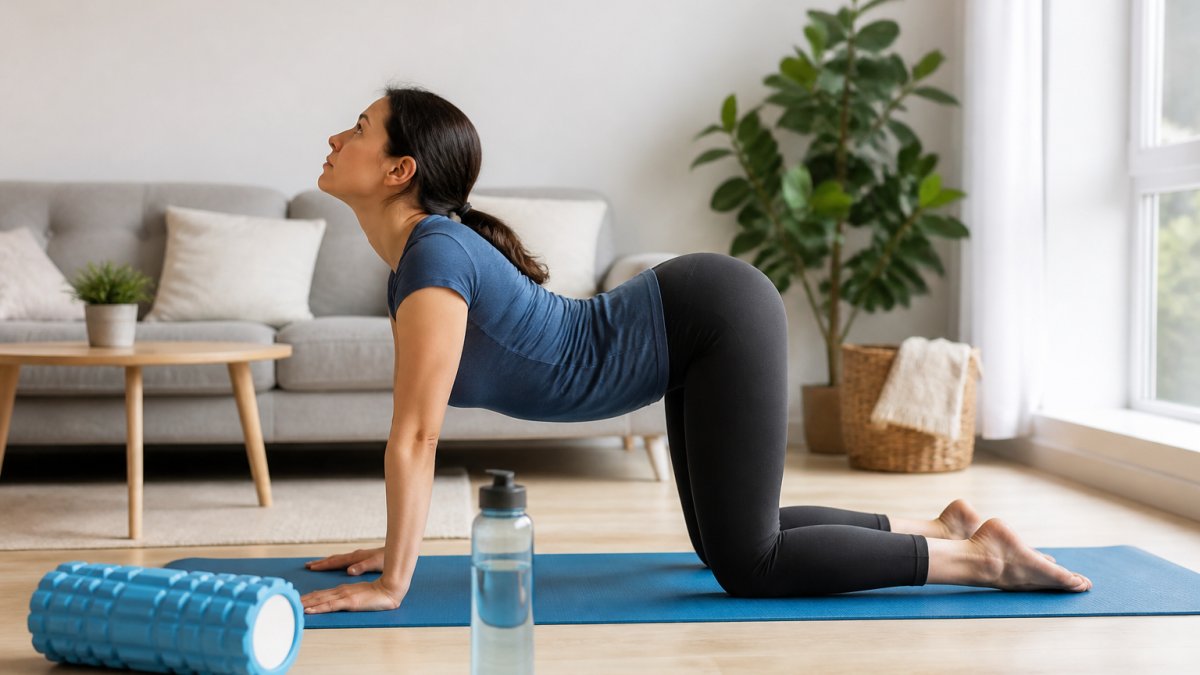
At Nader care, we believe knowledge is your first tool for feeling better naturally. Staying still weakens the muscles supporting your spine; gentle movement keeps them working and eases stiffness.
Chronic back pain is discomfort lasting longer than three months, often from injury, poor posture, or ongoing strain.
Three Safe Movements to Begin With
These moves are low-impact and easy to modify:
- Cat-cow stretch: On hands and knees, arch and round your back slowly. Repeat 8 to 10 times.
- Knee-to-chest: Lie on your back, pull one knee gently toward your chest, hold 20 seconds. Switch sides.
- Pelvic tilt: Lie on your back with knees bent. Flatten your lower back against the floor, hold 5 seconds, release.
Stop if any move causes sharp pain. A dull ache is usually fine; a stabbing pain is not.
Step 2: Apply Heat and Cold Therapy Correctly
Heat and cold both ease back pain, but they work differently and suit different pain patterns. Choosing the wrong one can worsen a flare-up.
How heat works: warmth dilates blood vessels, boosts blood flow, and relaxes muscle fibres, making it useful for dull, stiff, achy pain and the morning stiffness many people with chronic back pain wake up with.
How cold works: cooling narrows blood vessels and slows nerve conduction, making it useful for sharp, acute, or swollen pain, a fresh strain, a flare-up after overdoing it, or a hot, inflamed spot.
Matching the Therapy to the Pain
| Pain pattern | Best choice | Why |
|---|---|---|
| Dull ache, stiffness, morning tightness | Heat | Relaxes muscle fibres, boosts circulation |
| Sharp, acute, or post-activity soreness | Cold | Reduces swelling, numbs nerve endings |
| Flare-up with muscle spasm | Cold first, then heat | Calms the spasm, then relaxes the muscle |
| Ongoing chronic pain, no swelling | Heat | Comfort and circulation without masking injury |
How to Apply Heat Safely
- Use a heat pad, wheat bag, hot water bottle, or warm bath for 15 to 20 minutes at a time.
- Always wrap the heat source in a towel, never place it directly on bare skin.
- Check the skin every few minutes; if it turns red or feels too hot, remove the heat.
- Do not use heat on an area that is swollen, hot to the touch, or newly injured.
- Do not fall asleep with a heat pad or hot water bottle in place, a common cause of burns.
- Avoid heat if you have reduced sensation (for example, from diabetes or nerve damage), because you may not feel a burn developing.
How to Apply Cold Safely
- Use an ice pack, frozen gel pack, or bag of frozen peas wrapped in a damp cloth for 10 to 15 minutes at a time.
- Never apply ice directly to bare skin, always use a cloth barrier.
- Check the skin every few minutes; stop if it becomes numb, white, or blotchy.
- Do not use cold if you have poor circulation, Raynaud's phenomenon, or reduced sensation in the area.
- Leave at least an hour between cold applications.
Alternating Heat and Cold
A common approach is to alternate: heat before gentle exercise to loosen tight muscles, then cold afterwards if the area feels sore or swollen. Contrast therapy, alternating warm and cool showers, helps some people with general stiffness, though the evidence is mixed.
Step 3: Set Up Your Home Office With Ergonomic Tips for Home Office Comfort
Poor desk setup is a leading cause of daily back strain, and the fix is often simple and cheap. Good ergonomics keeps your body neutral and supported, reducing muscle tension and protecting spinal alignment.
Desk, Chair, and Screen Position
Follow these basics:
- Chair: Feet flat on the floor, knees at hip level. Add a cushion or rolled towel for lower back support.
- Screen: Top of the screen at eye level, an arm's length away.
- Desk: Elbows at roughly 90 degrees when typing.
- Breaks: Stand and stretch every 30 minutes.
Step 4: Choose Sleep Positions for Back Pain Relief
The right sleep position can cut morning stiffness; the wrong one makes it worse, and because most people spend six to eight hours in the same position, the effect compounds nightly. The goal is neutral spinal alignment: ears over shoulders, shoulders over hips, hips over knees. Any position that breaks that line strains muscles and discs.
The Three Main Positions, Ranked
1. On your back (best for most people with lower back pain)
Lying on your back distributes weight evenly and keeps the spine's natural curve, but the lower back can arch into the mattress, so you need support under the knees.
- Place a pillow or rolled towel under your knees to flatten the lower back slightly and take pressure off the lumbar spine.
- If you have neck pain too, use a pillow that fills the gap between your neck and the mattress, not one that pushes your head forward.
- A small rolled towel under the lower back can add support on a softer mattress.
2. On your side (good if you snore or have hip pain)
Side sleeping keeps the spine straight but tilts the hips and can pull the lower back out of alignment. The fix is a pillow between the knees.
- Place a pillow between your knees and ankles. This keeps the hips level and stops the top leg from dragging the pelvis forward.
- Draw your knees up slightly, a gentle foetal position, to take pressure off the lumbar discs.
- Use a pillow that supports your neck so your head doesn't tilt down or up.
- If you have shoulder pain, sleep on the opposite side or use a pillow that fills the space under your head and neck.
3. On your stomach (worst for most people)
Stomach sleeping arches the neck and strains the lower back, forcing the spine into extension for hours. If you can't sleep any other way:
- Place a thin pillow under your pelvis to reduce the arch.
- Use a very flat pillow under your head, or none at all.
- Consider a body pillow along your side to encourage rolling onto your side during the night.
Pillow and Mattress Mechanics
Your pillow is a spinal alignment tool: too high pushes your neck forward, too low lets it drop, and the right height fills the gap between neck and mattress. A medium-firm mattress suits most people, though heavier sleepers often need firmer and lighter sleepers may prefer medium-firm. A sagging mattress adds to your pain; a topper buys time, but it usually needs replacing.
Breaking the Sleep-Pain Cycle
Poor sleep makes pain worse, and pain makes sleep harder, one of the most common patterns in chronic back pain, and worth addressing directly.
- Keep a steady schedule. Go to bed and wake at the same time, even at weekends, to anchor your body clock.
- Keep the room cool, dark, and quiet. A room that is too warm disrupts sleep and can make pain feel more intense.
- Avoid screens for an hour before bed. Blue light delays melatonin release and makes it harder to fall asleep.
- Wind down deliberately. A warm bath, gentle stretching, or deep breathing can signal that sleep is coming.
- If you wake in pain, get up. Lying there tensing against the pain makes it worse. Move gently, apply heat or cold if it helps, and return to bed when sleepy.
Step 5: Calm Your Nervous System With Mindfulness and Deep Breathing
Stress and pain feed each other: tension tightens muscles and the pain grows. Mindfulness and deep breathing help break that loop by signalling your body to relax. Try this:
- Sit or lie comfortably.
- Breathe in through your nose for a count of four.
- Hold for four.
- Breathe out slowly for a count of six.
- Repeat for five minutes.
Mindfulness means paying attention to the present without judgment. Even a few quiet minutes a day can lower stress and ease muscle tension.
Step 6: Use Anti-Inflammatory Diet and Sleep Hygiene to Support Recovery
What you eat and how you sleep both shape how you feel. Neither is a cure, but both support natural recovery. An anti-inflammatory diet focuses on whole foods that may help reduce inflammation:
- Oily fish, nuts, and seeds
- Colourful vegetables and fruit
- Whole grains and olive oil
- Plenty of water
Limit processed foods, added sugar, and too much alcohol. These can drive inflammation and disrupt sleep.
For sleep hygiene, keep a steady schedule, wake at the same time daily, keep your room cool, dark, and quiet, and avoid screens for an hour before bed. Gentle exercise like walking, swimming, or yoga supports both goals, lowering inflammation and improving sleep quality over time.
Step 7: Know When to See a Doctor: Red Flags for Chronic Back Pain
Most back pain can be managed at home, but some signs mean you need medical help and should never wait.
Seek urgent advice if you notice any of these red flags:
- Loss of bladder or bowel control
- Numbness around the groin or inner thighs
- Sudden weakness in one or both legs
- Pain after a fall or serious injury
- Unexplained weight loss with back pain
- Fever or chills alongside the pain
These signs can point to serious conditions needing prompt care, do not self-treat them at home.
The psychological impact of chronic pain is real and often overlooked. Long-term pain can lead to low mood, anxiety, and poor sleep, so talking to a professional is just as important as treating your back.
Conclusion: Building a Daily Routine That Lasts
Chronic back pain rarely disappears overnight. The goal is steady progress, not a quick fix.
A simple daily routine works best:
| Step | Action | Time | Frequency |
|---|---|---|---|
| 1 | Gentle stretches | 10 min | Daily |
| 2 | Heat or cold therapy | 15 min | As needed |
| 3 | Ergonomic check | 5 min | Daily |
| 4 | Deep breathing | 5 min | Twice daily |
| 5 | Anti-inflammatory meal | Varies | Daily |
| 6 | Sleep routine | 30 min | Nightly |
Pick two or three to start. Add more as they become habits.
If you want deeper guidance, Nader care offers digital ebooks on managing pain and sleep naturally. Each comes with personalised email support, so you get real answers, not automated replies. Our focus is simple: help you live happier and with less pain, using natural methods and your own will to improve.
Get started with Nader care and build a calmer, more comfortable daily routine.
Frequently Asked Questions
What are the most effective natural ways to relieve severe back pain at home?
Gentle movement, heat therapy, and proper sleep positions form the foundation of home management for chronic back pain. Walking for 10-15 minutes daily, using a heat pad on tense muscles, and sleeping on your side with a pillow between your knees can ease discomfort. Mindfulness and deep breathing also help regulate the nervous system. For persistent severe pain, always consult a GP or physiotherapist before trying new routines.
What daily habits make chronic back pain worse?
Prolonged sitting without breaks, poor posture at a desk, and lifting with your back instead of your legs all aggravate chronic back pain. Sleeping on your stomach can also strain the spine. Other triggers include skipping gentle exercise, ignoring stress, and relying only on painkillers without addressing muscle tension. Small adjustments like standing every 30 minutes and using a lumbar cushion can reduce flare-ups significantly.
When should I seek professional medical advice for back pain?
See a doctor if you experience numbness in the groin or legs, loss of bladder or bowel control, unexplained weight loss alongside back pain, or pain that follows a fall or accident. These red flags may indicate nerve compression or fracture. Also seek help if home remedies for chronic back pain bring no improvement after several weeks, or if pain disrupts sleep and daily activities.
Can lifestyle changes significantly reduce long-term back discomfort?
Yes. Regular gentle exercise, ergonomic adjustments at home, better sleep hygiene, and stress management can all reduce chronic back pain over time. An anti-inflammatory diet rich in vegetables, oily fish, and whole grains may also help. The key is consistency: small daily habits like stretching, walking, and using heat therapy build up to meaningful relief. Combine these with guidance from a healthcare professional for best results.