
Table of Contents
- Why Your Sleep Quality Keeps Suffering
- Sleep Hygiene Best Practices That Make a Real Difference
- How to Improve Sleep Quality Naturally Through Physical Activity
- Relaxation Techniques for Sleep That Actually Calm the Mind
- Temperature Regulation and Blue Light: Two Overlooked Levers
- How Long Should It Take to Fall Asleep, and What to Do If It Takes Too Long
- How to Improve Sleep Quality Naturally as a Shift Worker
- Conclusion
Last Updated: August 30, 2026
Poor sleep is one of the most common complaints across every age group. At Nader care, we provide resources for people who have tried standard advice and still lie awake at 2am wondering what they are doing wrong. This guide on how to improve sleep quality naturally goes beyond the usual list of dos and don'ts to give you a practical, honest framework you can apply tonight.
Sleep problems are rarely about one bad habit, they result from several small misalignments stacking up. Fix one, and you may notice modest improvement. Fix the pattern, and the difference can be dramatic.
Below, we cover the science of your sleep-wake cycle, the specific environmental and behavioural levers that matter most, and two angles that most guides skip entirely: psychological grounding techniques and practical strategies for shift workers.
NHS guidance on sleep and tiredness
Why Your Sleep Quality Keeps Suffering
Sleep quality is a measure of how restorative your sleep actually is, not just how many hours you spend in bed. You can clock eight hours and still wake up exhausted if your sleep architecture is fragmented or your circadian rhythm is misaligned.
The circadian rhythm is your body's internal 24-hour clock, governed largely by light exposure, meal timing, and temperature cues. When those cues are inconsistent, your sleep-wake cycle becomes unpredictable. Melatonin production depends on a reliable drop in light and body temperature in the evening. Disrupt either signal and sleep onset gets pushed later, sleep latency increases, and nocturnal wakefulness becomes more frequent.
Stress is the other major driver. Elevated cortisol levels in the evening suppress melatonin and keep your nervous system in a low-grade alert state. Many people describe lying in bed with a busy mind, not realising the problem started hours earlier with unmanaged stress and poor wind-down habits. The good news is that most of these factors are within your control.
Sleep Hygiene Best Practices That Make a Real Difference
Sleep hygiene is the collection of daily habits and environmental conditions that support consistent, restorative sleep. It is not a single trick; it is a system.
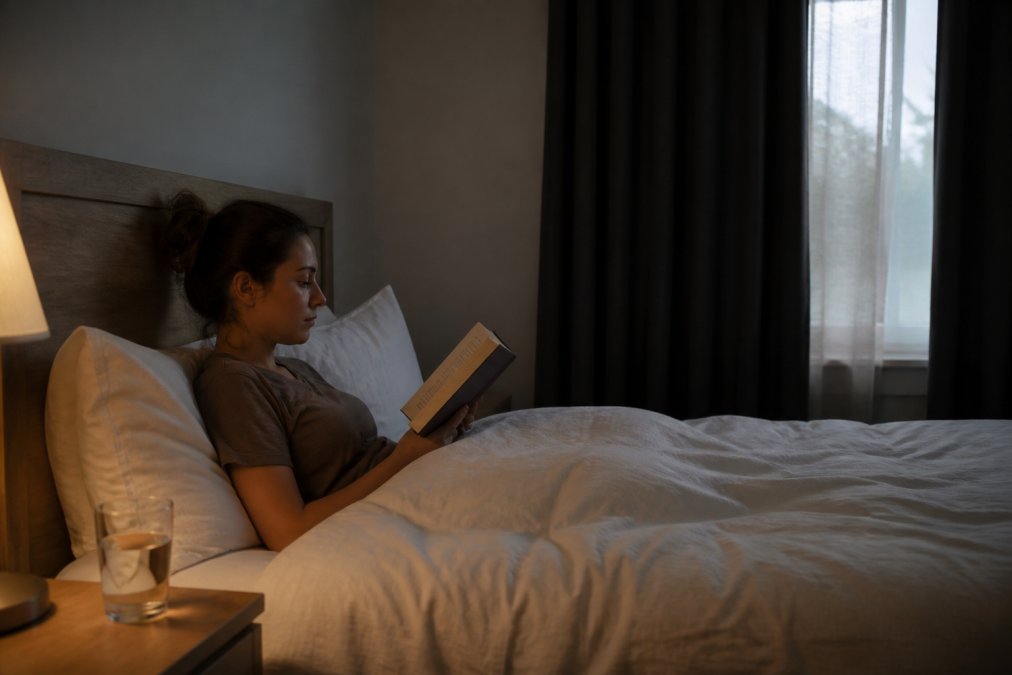
Fix Your Sleep Schedule First
The single most effective thing you can do to improve sleep quality is to wake up at the same time every day, including weekends. Your circadian rhythm is anchored by your wake time more than your bedtime. When you wake consistently, your body learns to time melatonin release, cortisol peaks, and temperature shifts around that anchor.
A common mistake is trying to "catch up" on sleep at weekends by sleeping in two or three hours later. This shifts your circadian rhythm in the same way that flying across time zones does, researchers call it social jet lag, and it is one of the most underappreciated causes of persistent sleep disturbances. Set your alarm, get up, and expose yourself to natural light within the first thirty minutes. Do this for two weeks before judging whether any other strategy is working.
Optimise Your Sleep Environment
Your sleep environment sends signals to your brain about whether it is safe to enter deep sleep. A restful environment is dark, cool, quiet, and associated only with sleep.
Key adjustments that make a measurable difference:
- Darkness: Even small amounts of light can suppress melatonin production. Blackout curtains or a sleep mask are worth the investment.
- Temperature: A bedroom between 16°C and 18°C supports the natural drop in core body temperature that triggers sleep onset.
- Noise: Consistent background sound, such as a fan or white noise, is generally more effective than silence for people sensitive to intermittent noise.
- Association: If you use your bed for work, scrolling, or watching television, your brain learns to associate the bed with wakefulness. Reserve the bed for sleep and sex only.
Caffeine, Alcohol, and the Habits That Quietly Wreck Sleep
Caffeine has a half-life of roughly five to seven hours in most adults, meaning that a coffee at 3pm still has half its stimulant effect at 8pm or 9pm. If your sleep latency is high, cutting off caffeine before noon is worth trying for two weeks.
Alcohol is more deceptive. It helps you fall asleep faster, but it disrupts sleep architecture in the second half of the night, suppressing REM sleep and increasing nocturnal wakefulness. You fall asleep quickly and wake up unrested.
How to Improve Sleep Quality Naturally Through Physical Activity
Physical activity is one of the most evidence-supported ways to improve sleep quality, and most people are not using it strategically. Regular moderate exercise increases slow-wave sleep, the deepest and most physically restorative stage of your sleep cycle. It also reduces cortisol levels over time and helps regulate the circadian rhythm, particularly when done outdoors in natural light.
The timing question is nuanced. Many people find that exercising in the evening raises their core body temperature and increases alertness, which can delay sleep onset. For those individuals, morning or early afternoon exercise works better. What the evidence consistently supports is this: even a thirty-minute walk during daylight hours improves sleep quality and daytime alertness over time. Consistency matters far more than intensity.
According to Mental Health Foundation guidance on sleep and physical health, regular physical activity is consistently associated with better sleep health and reduced symptoms of insomnia.
Relaxation Techniques for Sleep That Actually Calm the Mind
Most people treat relaxation as passive: they sit on the sofa and call it winding down. The problem is that passive consumption, particularly of stimulating content, keeps the nervous system engaged. Real relaxation for sleep requires active downregulation.

Psychological Grounding Before Bed
Psychological grounding techniques bring your attention into the present moment and interrupt the rumination loops that keep many people awake. This is one of the most overlooked areas in mainstream sleep advice, and it makes a significant difference for people whose sleep disturbances are driven by anxiety.
The 5-4-3-2-1 technique is a practical starting point. Before getting into bed, name five things you can see, four you can physically feel, three you can hear, two you can smell, and one you can taste. The exercise redirects cognitive attention away from abstract worry and into sensory experience.
Journalling is another grounding method with strong practical support. Writing down your unfinished tasks or worries before bed, rather than trying to mentally hold them, reduces the cognitive load that contributes to sleep onset problems. A simple "brain dump" of three to five things on your mind takes less than five minutes and can meaningfully reduce sleep latency. Build grounding into your bedtime routine at least thirty minutes before you intend to sleep, not when you are already in bed and frustrated.
Breathing Methods and Progressive Muscle Relaxation
Controlled breathing directly activates the parasympathetic nervous system, which is the physiological opposite of the stress response. Box breathing, where you inhale for four counts, hold for four, exhale for four, and hold for four, is straightforward and effective. The 4-7-8 method, where the exhale is extended to eight counts, places additional emphasis on the exhale, which is most associated with nervous system downregulation.
Progressive muscle relaxation involves systematically tensing and releasing muscle groups from the feet upward. Both methods take five to ten minutes and can be done in bed. Practised consistently, they become reliable cues that signal to the brain that sleep is approaching.
| Technique | Time Required | Best For | When to Use |
|---|---|---|---|
| 5-4-3-2-1 Grounding | 3-5 minutes | Anxious, racing thoughts | 30 min before bed |
| Brain dump journalling | 5 minutes | Unfinished tasks, worry | 44-60 min before bed |
| Box breathing | 5 minutes | General stress, restlessness | In bed at lights out |
| 4-7-8 breathing | 3-5 minutes | Difficulty falling asleep | At sleep onset |
| Progressive muscle relaxation | 10 minutes | Physical tension, chronic stress | In bed before sleep |
Temperature Regulation and Blue Light: Two Overlooked Levers
Most sleep guides mention blue light briefly and move on. Fewer explain the mechanism, and almost none address temperature regulation with any precision. Both are more actionable than most people realise.
Temperature: Your core body temperature needs to drop by approximately 1°C to 2°C to initiate sleep. A warm bath or shower taken sixty to ninety minutes before bed causes blood to move to the surface of the skin, which actually accelerates core cooling after you get out. A cool bedroom supports this process throughout the night.
Blue light exposure: Blue light in the short-wavelength range suppresses melatonin production by signalling to the brain that it is still daytime. Screens, LED lighting, and energy-saving bulbs all emit significant blue light. The practical fix is to shift your home lighting to warm tones in the evening, use night mode on devices, and avoid bright overhead lighting in the two hours before bed.
According to Sleep Foundation overview of melatonin and light exposure, even brief exposure to bright light in the evening can delay melatonin onset by up to ninety minutes.
How Long Should It Take to Fall Asleep, and What to Do If It Takes Too Long
The normal range for sleep latency is between ten and twenty minutes. Taking longer than thirty minutes consistently is a common marker of insomnia.
If you regularly take more than thirty minutes to fall asleep, the most important thing to do is stop trying to force it. Lying in bed awake for extended periods strengthens the association between your bed and wakefulness, which makes the problem worse over time. This is the core principle behind stimulus control therapy, a component of cognitive behavioural therapy for insomnia. If you have been awake for more than twenty minutes, get up, go to another room, and do something calm in dim light until you feel genuinely sleepy.
For persistent insomnia, the NICE guidelines on sleep disorders and CBT-I recommend cognitive behavioural therapy for insomnia as the first-line treatment before considering any medication.
How to Improve Sleep Quality Naturally as a Shift Worker
Shift work creates a fundamental conflict between the demands of your schedule and the biology of your circadian rhythm. Most sleep advice is written for people with conventional schedules, which is why shift workers often find that standard sleep hygiene best practices simply do not translate.
Anchor your sleep window. Even when your shift pattern rotates, try to keep your sleep start time as consistent as possible within each rotation block. Frequent, large shifts in sleep timing are harder on the circadian rhythm than a stable but unconventional schedule.
Control light aggressively. If you sleep during the day, blackout curtains are non-negotiable. If you need to be alert during a night shift, bright light exposure at the start of the shift helps suppress melatonin and improve alertness. On the commute home after a night shift, wearing dark glasses reduces morning light exposure and helps your body prepare for daytime sleep.
Manage naps strategically. A planned nap of twenty to thirty minutes before a night shift improves alertness without producing significant sleep inertia. Longer naps can leave you feeling groggy and may reduce your ability to sleep during your main sleep window.
Protect your sleep environment from household noise. Communicating your sleep schedule to others in your home, using earplugs or white noise, and placing a simple sign on your door can make a significant difference to sleep quality when the rest of the world is awake.
Shift workers are also at higher risk of sleep deprivation accumulating over time. Prioritising sleep as a non-negotiable health requirement is the most important mindset shift available.
Poor sleep rarely has a single cause, and that is exactly why generic advice so often fails. The Nader care approach to how to improve sleep quality naturally is built on the principle that understanding the mechanism gives you the ability to make genuinely informed choices, rather than following rules you do not understand. Our digital ebooks and personalised email support are designed to help you build that understanding at your own pace, with guidance tailored to your specific situation. If you are ready to sleep better and wake up with more energy, explore the Nader care wellbeing collection and start applying what you learn tonight.
Frequently Asked Questions
Q: How long should it take to fall asleep?
A: Sleep onset typically takes between 10 and 20 minutes for most adults. Falling asleep in under five minutes suggests you may be sleep-deprived rather than well-rested. Taking longer than 30 minutes most nights points to poor sleep latency, which is often linked to stress, irregular sleep schedules, excessive caffeine, or too much blue light exposure before bed. Addressing those root causes consistently tends to bring sleep onset back into the healthy range within a few weeks.
Q: What is the best natural thing to help you sleep?
A: There is no single best answer because sleep quality depends on multiple factors working together. The most consistently effective natural approaches are maintaining a fixed sleep-wake cycle, keeping your bedroom cool and dark, cutting caffeine at least six hours before bed, and winding down with a calming bedtime routine. Relaxation techniques such as slow breathing or body scanning also reduce cortisol levels and help the body shift into sleep mode without relying on supplements or medication.
Q: Why is my sleep quality consistently low?
A: Persistently poor sleep quality usually comes down to disrupted circadian rhythm, high stress, or an environment that does not support sleep. Common culprits include irregular bedtimes, evening screen use that suppresses melatonin production, a bedroom that is too warm, and unmanaged anxiety. Shift work makes things harder still by forcing sleep at times that conflict with natural light cues. Tracking your sleep patterns for a week or two can reveal which factor is doing the most damage so you can address it directly.
Q: How does light exposure affect my circadian rhythm?
A: Light is the main signal your body uses to set its internal clock. Morning natural light suppresses melatonin and raises alertness, anchoring your sleep-wake cycle to the day. Evening blue light from screens does the opposite of what you want: it delays melatonin production, pushing sleep onset later and reducing overall sleep quality. Getting bright light exposure within an hour of waking and dimming screens two hours before bed are two of the most direct ways to improve sleep quality naturally by working with your circadian rhythm.