
Table of Contents
- Why Look Beyond Melatonin for Sleep?
- Magnesium for Sleep Benefits: Which Form Works Best?
- Herbal Sleep Aids: Valerian Root, Chamomile and Lemon Balm
- L-Theanine and Ashwagandha: Calming the Racing Mind
- How to Improve Sleep Hygiene Naturally for Better Rest
- Safety, Dosage and Drug Interactions: What You Need to Know
- Cost and Long-Term Use: Are Natural Alternatives Worth It?
- Conclusion: Finding Your Best Natural Sleep Solution
- Frequently Asked Questions
Last Updated: September 29, 2026
Why Look Beyond Melatonin for Sleep?
Melatonin is a hormone, not a herbal remedy. The best natural alternatives to melatonin for sleep support the body's own wind-down process rather than replacing a hormone it already produces. We hear from readers who have relied on melatonin for months and now want something gentler.
The concerns are practical: melatonin can leave you groggy, is not recommended for long-term nightly use in many cases, and does nothing for a racing mind. It also interacts with blood thinners, immunosuppressants and some antidepressants, so check before taking it if you are on regular medication.
The alternatives below work on different levers: muscle relaxation, nervous system calming, and the bedtime routine itself. Here is which have the strongest evidence and how to use them safely.
Magnesium for Sleep Benefits: Which Form Works Best?
Magnesium supports muscle relaxation and helps regulate the neurotransmitters involved in sleep onset. It is one of the most studied minerals for sleep quality and is generally well tolerated.
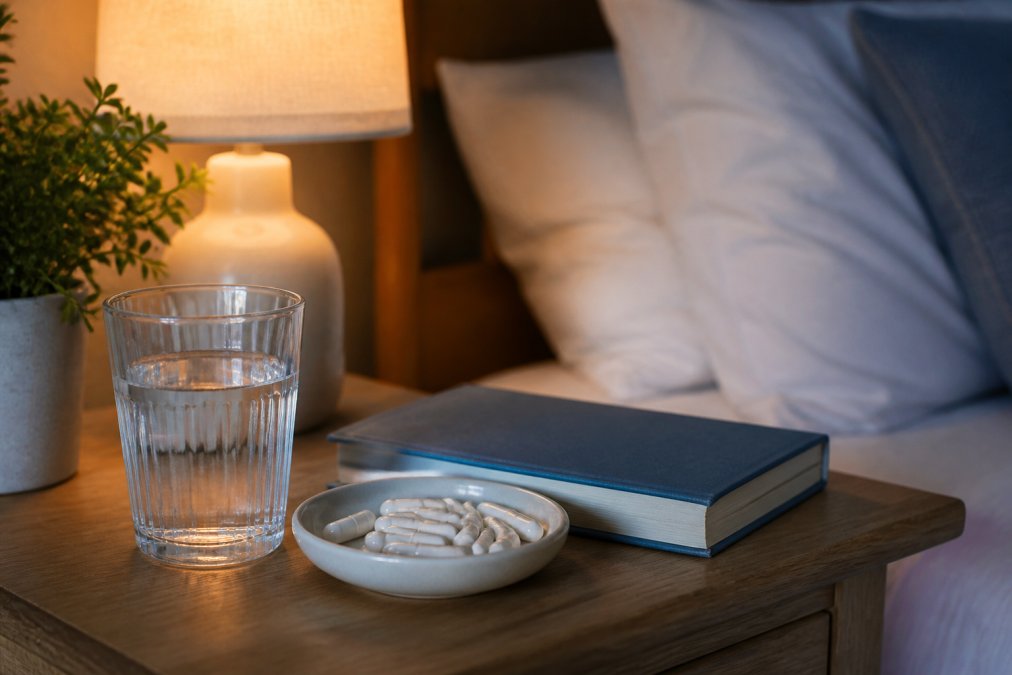
The form you choose changes how well it absorbs. Magnesium glycinate is bound to glycine, which is highly bioavailable and gentle on the stomach.
Magnesium Glycinate vs. Other Forms
| Form | Bioavailability | Best For | Watch Out For |
|---|---|---|---|
| Glycinate | High | Muscle tension, restless legs | Costs more |
| Citrate | High | Constipation alongside sleep issues | Loose stools |
| Oxide | Low | Budget buyers | Poor absorption |
| Threonate | Moderate | Cognitive focus | Limited sleep research |
A common mistake is taking magnesium right before bed on an empty stomach. Give it 30 to 60 minutes and pair it with your wind-down routine.
Herbal Sleep Aids: Valerian Root, Chamomile and Lemon Balm
Herbal options suit mild, stress-driven sleeplessness. They are gentler than melatonin and generally non-habit forming, though the trade-off is a milder effect.
Valerian Root: Traditional Sedative with Modern Evidence
Valerian root is traditionally used to shorten sleep latency, the time it takes to fall asleep. Evidence is mixed and results vary, so treat it as support rather than a cure. Quality also varies widely between brands.
L-Theanine and Ashwagandha: Calming the Racing Mind
If your problem is a mind that will not switch off, these two are worth trying, but they work in completely different ways, on different timescales, with different evidence. Treating them as interchangeable is the most common mistake.
L-Theanine: Fast-Acting, Evidence-Backed, Mild
L-theanine is an amino acid found almost exclusively in tea leaves (Camellia sinensis). It is responsible for the calm-but-alert feeling of green tea, as opposed to the jittery edge of coffee.
Ashwagandha: Slow-Build Adaptogen, Not a Sleep Aid
Ashwagandha (Withania somnifera) is an adaptogen, not a sedative. It does not make you sleepy, it moderates the stress response so cortisol follows a healthier curve across the day.
Which One, and Can You Take Both?
| L-Theanine | Ashwagandha | |
|---|---|---|
| Onset | 30-60 minutes | 2-4 weeks |
| Mechanism | Alpha waves, GABA/glutamate | HPA axis, cortisol |
| Best for | Racing mind tonight | Stress-driven pattern |
| Evidence for sleep | Moderate | Moderate (indirect) |
| Pregnancy | Discuss with GP | Avoid |
A common pattern is to use L-theanine as the acute tool while ashwagandha builds in the background, but start one at a time, at a low dose, for two weeks each, so you can tell which one is actually doing the work.
How to Improve Sleep Hygiene Naturally for Better Rest
Sleep hygiene is the daily habits and bedroom conditions that let your circadian rhythm do its job. Get it right and every supplement above works better; skip it and you are fighting yourself.
Try these tonight:
- Keep a fixed wake time, even at weekends
- Dim lights and screens for the last hour before bed
- Keep the bedroom cool, dark and quiet
- Avoid caffeine after early afternoon
- Use your bed for sleep only, not scrolling
Safety, Dosage and Drug Interactions: What You Need to Know
Natural does not mean risk-free, and most guides never tell you what not to mix. Below is a practical, interaction-first reference, the kind of information a pharmacist would give you at the counter.
The Interaction Checklist
Before adding any supplement to your routine, check it against anything you already take:
| Supplement | Do not combine with | Why |
|---|---|---|
| Valerian root | Benzodiazepines, opioids, antihistamines, alcohol, prescription sedatives | Additive sedation; can slow reaction time and breathing |
| Ashwagandha | Thyroid medication, immunosuppressants, sedatives, benzodiazepines | Can raise thyroid hormones; may reduce immunosuppressant effect |
| Magnesium | Diuretics, blood-pressure medication, some antibiotics (e.g. tetracyclines, quinolones) | Can lower blood pressure further; can reduce antibiotic absorption |
| L-theanine | Sedatives, blood-pressure medication | Additive calming and hypotensive effect |
| Chamomile | Warfarin and other blood thinners | Contains coumarin compounds that may add to anticoagulant effect |
| Lemon balm | Thyroid medication, sedatives | May interfere with thyroid function and add to sedation |
Demographic-Specific Cautions
Pregnancy and breastfeeding: Avoid ashwagandha. Valerian, chamomile and lemon balm have insufficient safety data in pregnancy, discuss with your midwife or GP first. Magnesium and L-theanine are generally considered low-risk at normal doses, but confirm with your antenatal team.
Dosage Principles That Apply to All of Them
- Start low. Take the lowest dose on the label for the first two weeks, not the highest.
- One at a time. Introduce a single new supplement, wait two weeks, and judge before adding another.
- Standardised extracts only. For valerian and ashwagandha, buy products that state the extract name and the percentage of active compounds. Unstandardised powders vary wildly batch to batch.
- Time it correctly. Magnesium and L-theanine 30-60 minutes before bed; ashwagandha with food, earlier in the day.
- Set a review date. If you cannot tell after four weeks whether it helped, stop. A supplement you cannot evaluate is a supplement you should not keep buying.
When to See Your GP Instead
Self-treating is reasonable for mild, occasional sleeplessness. Book an appointment if you have:
- Insomnia lasting more than four weeks
- Daytime sleepiness that affects driving or work safety
- Loud snoring, gasping or witnessed pauses in breathing (possible sleep apnoea)
- Restless legs that disrupt sleep most nights
- Low mood, anxiety or intrusive thoughts alongside poor sleep
Cost and Long-Term Use: Are Natural Alternatives Worth It?
Most of these options can be a cost-effective approach. Valerian and chamomile are often considered more affordable entry points, with magnesium glycinate and ashwagandha typically in a mid-range, and L-theanine often inexpensive per dose and easy to cycle.
Conclusion: Finding Your Best Natural Sleep Solution
There is no single winner. Magnesium glycinate suits physical tension, L-theanine a racing mind, and valerian or chamomile mild stress-driven sleeplessness. The best natural alternatives to melatonin for sleep are matched to your actual problem, used consistently, and paired with real sleep hygiene.
Frequently Asked Questions
What is the most effective natural alternative to melatonin?
There is no single best option because sleep issues vary. Magnesium glycinate helps with muscle tension and relaxation, while L-theanine calms a racing mind without morning grogginess. Valerian root and chamomile have traditional sedative effects. For many people, combining a natural sleep alternative with good sleep hygiene produces the best results. Try one at a time to see what works for you.
Are herbal sleep supplements safe for long-term use?
Some are considered safe for extended periods, but research on long-term safety is limited. Valerian root and lemon balm are generally well tolerated, though valerian can interact with sedatives. Magnesium is safe for most people when taken at recommended doses. Always check with a pharmacist or GP before using any supplement for more than a few weeks, especially if you take prescription medication.
How can I improve my sleep quality without taking supplements?
Focus on sleep hygiene: keep a consistent bedtime and wake time, dim lights an hour before bed, avoid caffeine after midday, and keep your bedroom cool and dark. A relaxing bedtime routine, such as reading or gentle stretching, signals your body to wind down. These habits support your circadian rhythm and can improve sleep latency and restorative sleep without any pills.
Do magnesium supplements help with sleep?
Magnesium supports muscle relaxation and helps regulate neurotransmitters involved in sleep. Magnesium glycinate is highly bioavailable and less likely to cause digestive upset than other forms. It may help people with restless legs or physical tension at night. Effects are gradual, so take it consistently for a week or two before judging whether it works for you.
What are the side effects of natural sleep aids?
Side effects vary by supplement. Magnesium can cause loose stools in high doses. Valerian may cause drowsiness or headaches in some people. L-theanine is generally well tolerated but may lower blood pressure. Ashwagandha can affect thyroid function in rare cases. Start with a low dose and stop if you notice adverse reactions. Check with a healthcare professional if you take any medication.